Rocks & Rhone 2012

Rocks & Rhones

Last year’s postcard for Rocks & Rhone.  This year the dates are May 26 and 27.  Don’t miss it!

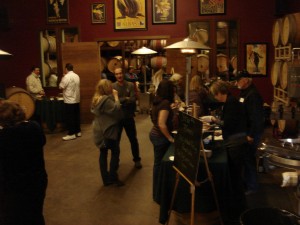
Passport is not the only wine event in El Dorado County.  It is the biggest, but not the only one.  One of the other events is coming up on Memorial Day weekend.  Five of the wineries in the Pleasant Valley region of El Dorado County put on the 2 day Rocks & Rhone event.

Rocks and Rhone features the Rhone style wines of the five participating wineries, food pairings, new releases, wine club specials and barrel tastings.  Along with the wine and food events, local artists and farms are featured.  The whole event brings a spot light to the wine makers, farmers, artists and artisans of Pleasant Valley and El Dorado County.

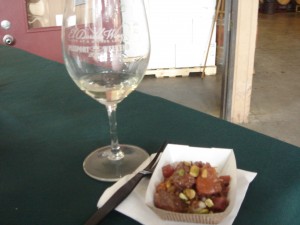
The participating wineries are Auriga, Holly’s Hill, Miraflores, Narrow Gate, and Sierra Vista.  Each winery is offering some really interesting food pairings with their wines.

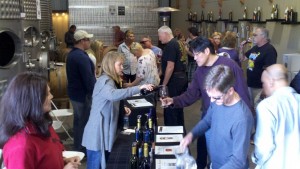
It is a smaller scale event than Passport and features more food and more interaction between the wine makers and the wine drinkers.  Advance Tickets are only $35 per person and are good for tasting on one day.  You can buy tickets for either Saturday tasting OR Sunday tasting.  If you buy tickets the day of the event they are $40 per person.

Now is the time to pick up your tickets.  And two months ago, apparently, was the time to book your hotel room.  Our favorite hotel was fully booked a month ago and we’re having to stay a little further away.  But it’s all good.  So, I’ll be there…with copies of my book in the back of my car if you want to buy an autographed copy.  :-)

For information about the event and a link to where you can purchase tickets check out the Pleasant Valley Wineries website.

El Dorado Passport 2012 Fun and Fabulous!

Vineyard at Gold Hill

The vineyard at Gold Hill, Photo (c)2012 David Locicero

Now that some time has passed, I am able to reflect on this year’s El Dorado Winery Association’s Passport 2012 with a bit more objectivity.

It was fun and fabulous!

My partner and I have been venturing to El Dorado County for Passport events since 2006.    Our first introduction to the region was a Passport event and that inspired us to continue going up 6 or more times a year for the past 6 years and led directly to my writing Pour Me Another.

The Passports have been crowded and sparsely attended varying from year to year and day to day (it is a 2 day event and Sundays are usually less crowded that Saturdays).  This year seemed pretty sparse to us.  We never ran into any crowds.  But in conversation with those pouring as well as the wine makers and owners we ran into, it seems our experience may not have been typical.  Sales were reported to be brisk.

My theory is that anybody venturing into the Sierras for a weekend of wine tasting in this economy tend to be the people that buy wines by the case.  So, even though the crowd aren’t as thick, sales remain more or less the same.  All the better for those of us who brave the threat of rain (it didn’t rain) or heat (it was blazing hot on the second weekend): no crowds makes it nicer.

I often get asked where I buy wine.  Well, with very few exceptions, I buy most of my wine at the wineries as a direct result of tasting it first.  This way I know pretty much that just about everything in my “cellar” is good.  I will also buy at Dig, a wine shop in San Francisco that specializes in French and Italian wines, based on the owner’s recommendations.  But for the most part I buy locally produced wine: California wines made in the Sierras, Santa Cruz mountains, at urban wineries or even in Napa and Sonoma that I have tasted.  In northern California we are spoiled like that.  But if the local wines are good, why buy foreign wines if you really are serious about sustainability and “green” issues.  The carbon footprint of those European, South American and Australian wines are HUGE.  The Passport events are my opportunity to taste at even more wineries that on a normal weekend in Gold Country.

This year there was an over-arching “theme” to the Passport event: “Mediterranean”.  Each of the wineries served their interpretation of “Mediterranean” food with their wines.  I suppose the theory was that most of the varietals that grow well in the Sierras are French, Italian or Spanish in origin.  I wasn’t that impressed.  One of the things I liked about past events was that the wine makers were able to serve food that they thought best went with their wines.  I didn’t always agree, but it led to some interesting and unexpected pairings.

White wine and beef

Madrona paired a riesling with a beef dish and it was GOOD. Photo (c)2012 David Locicero

Madrona often pairs their white wines with Thai food, which can be really interesting. This year the stand out pairing for me was at Madrona, where they paired a Moroccan beef tangine over couscous with their riesling.  The pairing of a white wine with a beef and beet dish was unexpected.  But the riesling was a perfect accompaniment to the citrus and spices in the beef stew.  Unexpected and perfect.  Such a wonderful discovery!

I personally tasted  36 wines at 11 wineries over the two days.  Most of the pours were in the 1/2 to 1 ounce size, though some were quite generous (2 ounces or more).  It probably added up to three glasses of wine consumed with food over the span of 5 hours on each of the two days.  These tweets from my Twitter feed sum up the best of the weekend:

 #passport2012 day 1 highlights: David Girard’s Coda Rouge, Alzante’s 04 nebbiolo, Jodar’s 08 cab franc


#passport2012 day 2 highlights: Mount Aukum’s 08 Bordeau blend BDX (futures), Skinner’s 1861 blend, Narrow Gate’s cab syrah blend (futures)

Passport 2013 is on our calendar already!


El Dorado Passport 2012 – Recovery Day

Just back from an outstanding Passport 2012.  This post will have to act as a placeholder and tease for upcoming posts about the event and the wines tasted.  A visual log perhaps?

View from Mount Aukum

You go to Gold Country for the views

Skinner's tasting room at the crest of the hill

You go to Gold Country for the vines

Tasting at Mount Aukum

You go to Gold Country for the Wines

Our merry band of wine tasters managed to visit 11 wineries in two days. We were able to visit David Girard – where we we able to chat with their wine maker Mari Wells, Gold Hill, Crystal Basin, Jodar – where we were able to chat with the owner-wine maker Vaughn, Madrona, Boeger – celebrating 40 years this year, Mount Aukum, Latcham, Skinner – where I was able to meet the owners, Miraflores and Narrow Gate – where we were able to chat at length with the owner/wine makers.

I’ll have more to post about the even in the next week or so. Cheers!

Old Growth Vines in Amador County: Posts I Wish I’d Written

Zinfandel Grapes

Zinfandel Grapes. The image is believed to be in the public domain.

Oh, man, there are times when I read something really phenomenal about a subject I’m knowledgeable about and think, “Man, I wish I’d written this”.  Well, today I had just that experience.

Patrick Frank, one of the writers at Palate Press, wrote a great piece about the old growth Zinfandel vines in Amador County that was published there today.  He provides a wonderful history of these vines, how and why Zinfandel vines ended up in Amador County and recounts how these vines have survived for 140+ years.  Go read it.  Really.  I’ll wait.

Read it?  Good.

There are many small vineyards in Gold Country with old growth Zinfandel vines dating from the 1860′s – 1880′s.  Some Gold Country wineries feature wines made from these.  I’ve tasted wines from these vines made by Deaver and Vino Nocento and others.

There are also wineries that feature wines made from plants that have grafts from the old growth vines on modern root stock.  I’m sure I’ve had some of these as well.  Though, they are labeled as being from “grandpere” vines, personally, I don’t think they count.

And, what, you may be asking yourself, makes wines made from grapes from old vines so special?  Well, it’s the flavor.  When you encounter wines made from old growth grapes, the flavor just blows away that made from younger vines.  The flavors are richer, more intense and more complex.

This is because the yield from old vines is lower.  There are fewer grapes per vine.  This means less wine can be made than from a similar number of younger vines.  But that means that all the energy and flavors get deposited in a fewer number of grapes.  It is almost like the grapes have been supercharged with flavors.

I also believe that there is a more complex flavor profile.  While the grapes are more intensely “Zinfandel” because of the concentrated flavors, similar affects can be created when vintners restrict the yield by cutting off some grape bunches early on.  But in the case of older vines, you get the added benefits of 140+ years of roots digging deep into the soil tapping into layers of geological goodness and dragging that up into the grapes.  This is where you can really taste the terroir, the essence of the place, which can only be hinted at in vines planted in the last 10 to 20 years.

If wines from old growth vines are so phenomenal, and they are, why don’t wineries leave their vines in place and let them get old?  Why do some wineries regularly pull out vines that are 25 years old or older?  Economics, my friend.  Economics.  Older vines don’t produce as many grapes.  This makes for great wines, but it means wineries can’t necessarily produce the volume of wines necessary to make a living.

Often times the old vines are grapes that no longer appeal to modern tastes.  Mission grapes, for instance.  The Catholic missionaries brought vine cuttings with them to the new world.  They early settled on a variety, probably Spanish in origin, that has come to be known as Mission.  This vine is extraordinarily hearty and can produce wine grapes in a wide range of climates.  This allowed the Missionaries to produce wine for Communion services pretty much wherever they landed.  But the wine is fussy and not great for drinking.  Most of the Mission vineyards were pulled out if not 100+ years ago, surely after the repeal of Prohibition, making room for Zinfandel, Barbera, Cabernet Sauvignon and all the other wines that suit our modern palates better.

Gold Country has more of these old growth vineyards than many grape growing regions, including not only Zinfandel, but also Mission.  So when you are up in the area, keep an eye out and jump at the chance to taste history!

El Dorado County Passport 2012 Coming

It is that time of the year again.  The El Dorado County Wine Makers Association’s Passport event is only a few weeks away.  The food and wine pairing event will be held on the weekends of 14-15 April and 21-22 April.  The roads around Placerville will be buzzing with wine-o’s! (In the best possible way).

This year there will be 32 wineries participating, including several new ones.  I, for one, can’t wait to get up there and taste at the new places…and of course to check in at some of my favorites.  I’m looking forward to tasting at the new places, Cielo Estates, Shadow Ranch and Synapse.  And I’ll be sure to drop in at Gold Hill, Jodar, Crystal Basin, Holly’s Hill, Miraflores and Skinner.  I’ll also be dropping in on others that aren’t my favorites just to see if and how their wines have changed and if I need to return to give their wines more consideration and maybe change my assessment of their wines in future editions of my book.

Pour Me Another: An Opinionated Guide to Gold Country Wines

Pour Me Another is one of the highest rated books about California Wines at Amazon.com

We’ll be going up with a small group of folks this year.  As much as this is work for a wine writer, it is also a wonderful get away with friends.  Up in the Foothills, the cell service can be spotty.  But I will be trying to tweet (find me on Twitter as WineDavid).

If you are going, do you have a copy of my book, Pour Me Another: An Opinionated Guide to Gold Country Wines?  Now is a great time to order it so you’ll have it in hand when you go.  Find your way around the back roads of El Dorado County using my maps and keep your tasting notes in the book on the tasting note pages provided for each winery.  Not all the wineries will be listed, as there are new wineries participating, but it’s a good start!  The book is available as a paperback and as a Kindle book.  And remember, you don’t need a Kindle to read Kindle formatted books.  Just download the no cost Kindle app to your smart phone and go to town!

If you are going, what are your can’t miss wineries?