Wine Journal Published

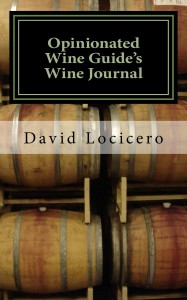
The cover of my Wine Journal

The cover of my Wine Journal

I am pleased to announce the publication of the Opinionated Wine Guide’s Wine Journal. The journal features blank tasting notes forms which I developed over the past few years for my own use.

I am a proponent of keeping tasting notes. Over the years I have used blank books, and various wine journals. But nothing really met my needs. So I developed my own form.

Now you can use the same form I do! The book is 250 pages and features enough forms for over 200 different wines as well as a glossary of wine terms. The journal will be available on is now available on Amazon.com in the next few days. Right now  It is available on Barnes & Noble. It is also available through my printing service.

Wine Is A Beverage Not A Financial Investment

I recently read a blog post by the engaging Madeline Puckette, the moving force behind WineFolly.com which irked me.  Madeline is a fun and knowledgeable wine expert and her posts rarely irk me.  Check out her site.  I recommend it highly.  But the post in question offered tips for those wanting to collect wine.

Wine is a beverageThe entire concept is anathema to me.  Wine is a beverage.  To me investing in wine the way one would invest in gold or stocks is the exact opposite of what wine is about.  It is what makes wine experts look like tools.  Spending ridiculous amounts of money on wine, like the idiots who recently spent $168,000 on a bottle of wine, is simply stupid.

What is the point of spending that much money on wine?  Unless you are made of money, all you really want to do with that bottle is wait a few years and sell it to some other idiot for even more money.  All the while the wine is going to waste.

Wine is meant to be consumed.  Don’t insult the wine maker by not drinking his or her wine.  While I am embarrassed by the number of bottles of wine I have in my “cellar”, each and every one of them will be consumed.  They might not be consumed today, or this month, or this year, but each and every one of them will be consumed.  Some are being saved for a particular occasion worthy of it’s goodness, but those occasions aren’t THAT infrequent that a bottle of wine won’t be consumed within 5 or 10 years.

Holding most wines longer than 10 or 15 years is largely a waste of the wine as most wines made today are made to be consumed and not aged.  Drink up!  There are some wines still being made to age.  If you want a wine for your new born’s 21st birthday, seek one of these out.  But if you want a wine that’s going to go up in value so you can resell it later?  Why?  I simply don’t understand investing in a consumable that you won’t consume.

Use wine to invest in relationships. The pay off will be huge!

Wine is a beverage.  Drink it.  The only way I can see wine as an “investment” is when you use it to invest in your friendships and family.  Open up the bottle and serve it with a good meal shared with family and good friends.  The conversation and intimacy and increased bonds of friendship will be your pay off.  THAT is a good investment.  But it isn’t about money.  The things of the greatest value in life are NEVER about money.

El Dorado Passport 2012 – Recovery Day

Just back from an outstanding Passport 2012.  This post will have to act as a placeholder and tease for upcoming posts about the event and the wines tasted.  A visual log perhaps?

View from Mount Aukum

You go to Gold Country for the views

Skinner's tasting room at the crest of the hill

You go to Gold Country for the vines

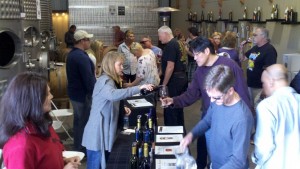
Tasting at Mount Aukum

You go to Gold Country for the Wines

Our merry band of wine tasters managed to visit 11 wineries in two days. We were able to visit David Girard – where we we able to chat with their wine maker Mari Wells, Gold Hill, Crystal Basin, Jodar – where we were able to chat with the owner-wine maker Vaughn, Madrona, Boeger – celebrating 40 years this year, Mount Aukum, Latcham, Skinner – where I was able to meet the owners, Miraflores and Narrow Gate – where we were able to chat at length with the owner/wine makers.

I’ll have more to post about the even in the next week or so. Cheers!

Old Growth Vines in Amador County: Posts I Wish I’d Written

Zinfandel Grapes

Zinfandel Grapes. The image is believed to be in the public domain.

Oh, man, there are times when I read something really phenomenal about a subject I’m knowledgeable about and think, “Man, I wish I’d written this”.  Well, today I had just that experience.

Patrick Frank, one of the writers at Palate Press, wrote a great piece about the old growth Zinfandel vines in Amador County that was published there today.  He provides a wonderful history of these vines, how and why Zinfandel vines ended up in Amador County and recounts how these vines have survived for 140+ years.  Go read it.  Really.  I’ll wait.

Read it?  Good.

There are many small vineyards in Gold Country with old growth Zinfandel vines dating from the 1860′s – 1880′s.  Some Gold Country wineries feature wines made from these.  I’ve tasted wines from these vines made by Deaver and Vino Nocento and others.

There are also wineries that feature wines made from plants that have grafts from the old growth vines on modern root stock.  I’m sure I’ve had some of these as well.  Though, they are labeled as being from “grandpere” vines, personally, I don’t think they count.

And, what, you may be asking yourself, makes wines made from grapes from old vines so special?  Well, it’s the flavor.  When you encounter wines made from old growth grapes, the flavor just blows away that made from younger vines.  The flavors are richer, more intense and more complex.

This is because the yield from old vines is lower.  There are fewer grapes per vine.  This means less wine can be made than from a similar number of younger vines.  But that means that all the energy and flavors get deposited in a fewer number of grapes.  It is almost like the grapes have been supercharged with flavors.

I also believe that there is a more complex flavor profile.  While the grapes are more intensely “Zinfandel” because of the concentrated flavors, similar affects can be created when vintners restrict the yield by cutting off some grape bunches early on.  But in the case of older vines, you get the added benefits of 140+ years of roots digging deep into the soil tapping into layers of geological goodness and dragging that up into the grapes.  This is where you can really taste the terroir, the essence of the place, which can only be hinted at in vines planted in the last 10 to 20 years.

If wines from old growth vines are so phenomenal, and they are, why don’t wineries leave their vines in place and let them get old?  Why do some wineries regularly pull out vines that are 25 years old or older?  Economics, my friend.  Economics.  Older vines don’t produce as many grapes.  This makes for great wines, but it means wineries can’t necessarily produce the volume of wines necessary to make a living.

Often times the old vines are grapes that no longer appeal to modern tastes.  Mission grapes, for instance.  The Catholic missionaries brought vine cuttings with them to the new world.  They early settled on a variety, probably Spanish in origin, that has come to be known as Mission.  This vine is extraordinarily hearty and can produce wine grapes in a wide range of climates.  This allowed the Missionaries to produce wine for Communion services pretty much wherever they landed.  But the wine is fussy and not great for drinking.  Most of the Mission vineyards were pulled out if not 100+ years ago, surely after the repeal of Prohibition, making room for Zinfandel, Barbera, Cabernet Sauvignon and all the other wines that suit our modern palates better.

Gold Country has more of these old growth vineyards than many grape growing regions, including not only Zinfandel, but also Mission.  So when you are up in the area, keep an eye out and jump at the chance to taste history!

Three Wineries to Carry Pour Me Another

Pour Me Another: An Opinionated Guide to Gold Country Wines

Pour Me Another is one of the highest rated books about California Wines at Amazon.com

I am happy to say that Pour Me Another: An Opinionated Guide to Gold Country Wines will be available for purchase in three Gold Country wineries!

In El Dorado County, Jodar Vineyards and Winery will be carrying my book.  In Amador County, both Sera Fina Cellars and Amador Cellars will be selling my book.  All three wineries make wonderful wines and have tasting rooms staffed by knowledgeable and friendly folk.  My thanks go out to these fine folks for carrying my book!

It is also available as a Kindle book, which can be read on a Kindle, on your PC, or on your smart phone (with the Kindle app).